


Strategy & Governance

You need to understand how decisions are actually made.
Understanding a place or system requires more than just reading its policies. I examine the institutions, relationships, interests, and local conditions that shape what actually happens—particularly for organizations working across the U.S.–Mexico border.

And yet, something isn’t working.
If you’ve ever tried to move a complex project, partnership, or initiative forward across institutions, sectors, or borders, you may have discovered that things don’t always work the way they do on paper.
You’ve done your homework and due diligence. The strategy makes sense. The right people seem to be involved. The approvals may even be in place.
All systems go, right?
Your project stalls like a set of rusty gears. Decisions that should be easy and simple become complicated and drawn out. Partners who seemed aligned begin pulling in different directions. Someone without an obvious role suddenly has enormous influence. The formal process says one thing, while what actually happens on the ground looks very different. An approach that worked perfectly well somewhere else runs into resistance here.
Meanwhile, the clock is running.
Every delay costs money. Your team is spending valuable time trying to solve a problem it can’t quite identify. Opportunities can disappear while everyone tries to figure out what—or who—is getting in the way. Everyone’s frustrated.
And the stakes may be higher than time and money.
Your credibility—and your organization’s reputation—may be on the line.
You need to know what is actually happening before you can decide what to do about it.
This is the part where I come in because governance isn’t always what or where you think it is.
Governance lives in formal institutions and written policy, but also in informal rules, social expectations, relationships, historical memory, economic incentives, and assumptions about who has the right to do what.
To understand why a system is producing the results it is, I look at the problem through four interconnected lenses that together reveal how power, authority, and influence actually operate in practice.
Here’s the framework.
Analytical Lenses
POWER AND INFLUENCE
Who actually shapes decisions, what interests are at stake, and where formal authority differs from real influence.
IMPLEMENTATION & PRACTICE
What’s supposed to happen, what actually happens on the ground, and where the gap emerges.
INSTITUTIONS & INCENTIVES
What rules, structures, priorities, and incentives shape how organizations and people behave.
HISTORY & CONTEXT
How past decisions, relationships, experiences, and local conditions shape what is possible now.
Formal rules tell us how a system is supposed to work. But they rarely tell us the whole story.
By examining institutions, stakeholders, power, policy, and practice together, I identify the informal relationships, competing interests, historical assumptions, and local conditions that shape what actually happens. This makes it possible to see where authority really lies, why apparently sound policies succeed or fail, where resistance is likely to emerge, and where opportunities for action exist.
Analysis in Practice: A Case Study in Parking and Governance
When a parking problem isn't really a parking problem
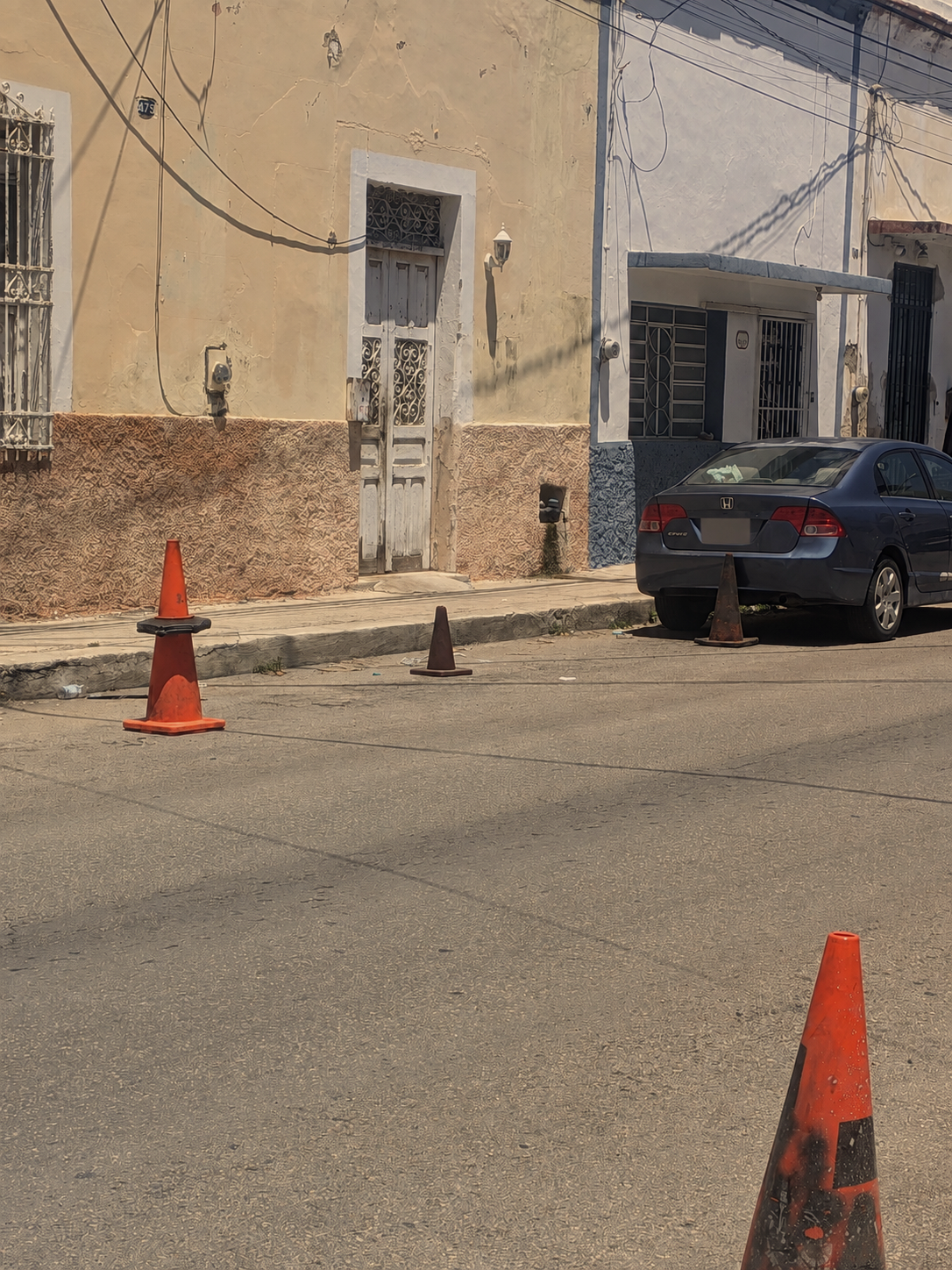
Across Mérida's historic center, residents and businesses use buckets, cones, chairs, signs, and other objects to claim public curb space for private use.
At first glance, it looks like a parking-enforcement problem.
But the buckets are evidence of something much larger.
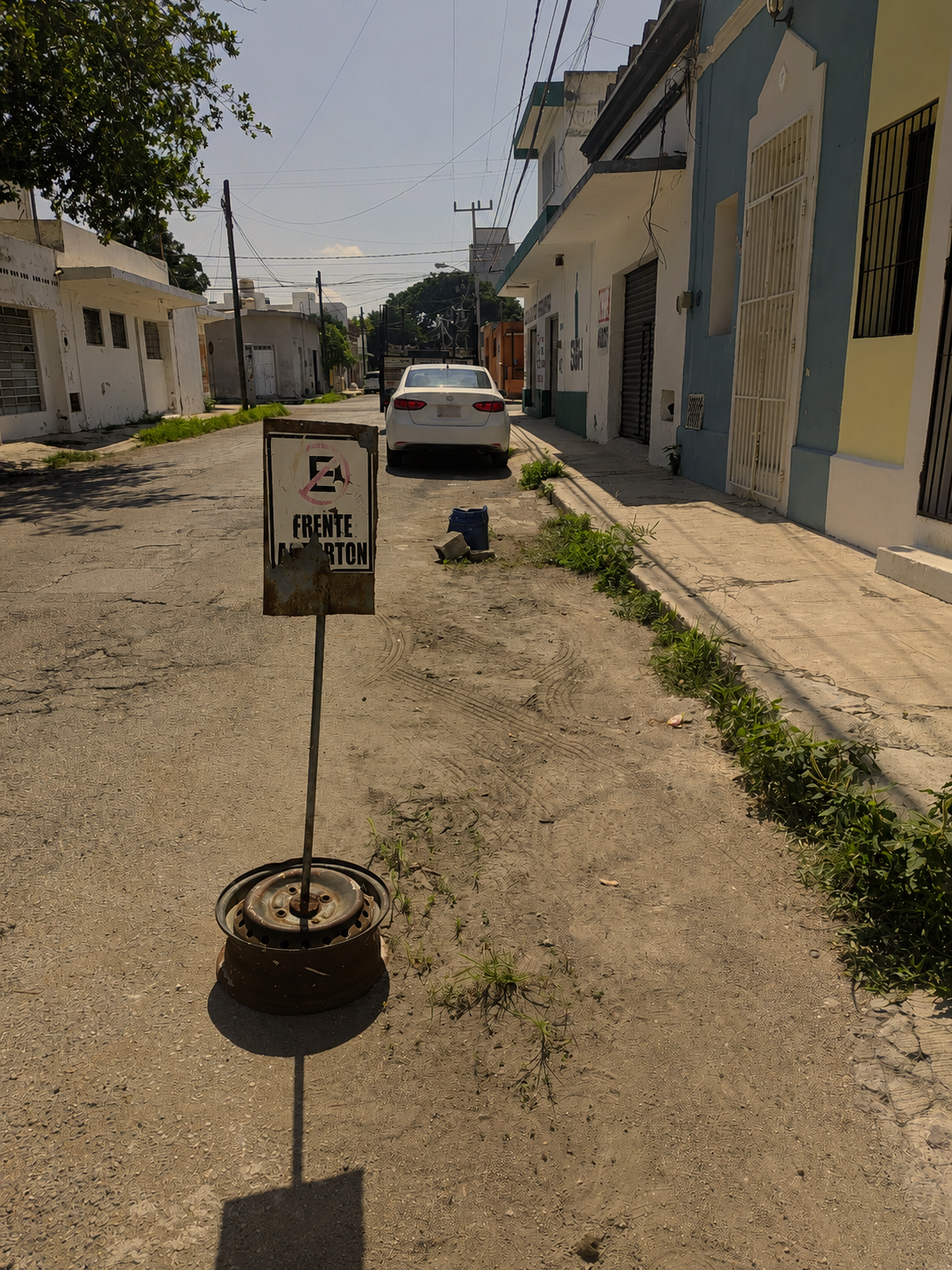

I looked at the street through my four analytical lenses. What I saw was not just a collection of household objects in a roadway. I saw a system shaped by scarcity, incentives, informal power, uneven enforcement, competing claims to public space, and deeply rooted expectations about who gets to use the street and for what purpose.
I traced the rules governing public streets, examined how those rules were enforced in practice, documented informal claims to curb space, and looked at the economic and political conditions that allow the practice to persist.
The visible problem is buckets. The underlying problem is contested governance.
What does this study in buckets help us understand? Now we know that the same dynamics that shape who controls a parking space can shape how a business, investment, partnership, or project operates. Formal rules can tell you what is permitted. They cannot always tell you how decisions will actually be made, which informal practices you will encounter, whose cooperation you will need, or where resistance may emerge.
Understanding what’s really happening helps you understand the operating environment before you make costly assumptions.
What do you get when you work with me?
BETTER DECISIONS. SMARTER INVESTMENT. STRATEGIC ADVANTAGE.
Entering a new market, building a partnership, or moving a complex initiative forward requires investment—of money, time, relationships, and reputation. The better you understand the operating environment before you commit, the better positioned you are to protect that investment and make it count.
I help you identify where the real risks lie, who and what can affect the outcome, which assumptions need to be tested, and where opportunities may be hiding.
The result is not simply a clearer picture of the situation. It's better information for making consequential decisions, managing risk, and putting your resources where they have the greatest chance of producing results.
You come to me because something is complicated, uncertain, or not working the way you expected. My job is to make the operating environment legible: to identify what is shaping the situation, explain why it matters, and help you understand what your realistic options are.
When our work is finished, you should have a clearer answer to three questions:
What is actually happening?
Not simply what the rules, organizational chart, strategy, or conventional wisdom say should be happening.
Why is it happening?
Which actors, interests, incentives, relationships, institutions, histories, and local conditions are producing the situation you see.
What can we do about it?
Where the risks and constraints lie, where you have room to maneuver, and which options are realistically available to you.

Life isn’t a zero-sum game, but let’s make sure you know the board. Understand the players. Anticipate what can happen. Don't make an expensive move without thinking through the consequences.
Here’s what we can focus on.
-
See who actually matters. I identify the people, organizations, interests, relationships, and informal networks shaping your project—and where formal authority may differ from actual influence.
-
Understand how the pieces fit together. A decision landscape brings actors, institutions, incentives, constraints, opportunities, and key decision points into a single picture of the environment you’re operating in.
-
Know where trouble may emerge—and where there may be room to move. I identify potential sources of resistance, delay, conflict, or reputational risk alongside points of alignment, emerging opportunities, and realistic openings for action.
-
Understand what you need to know before you act. This focused analysis explains the institutional, political, historical, and local conditions shaping a particular market, project, partnership, or decision—and what they mean for you.
-
Turn analysis into action. I translate the findings into clear, evidence-based options, including tradeoffs, constraints, and likely consequences, so you can decide what to do next.
Have a problem you can’t quite explain?
If something isn't working the way you expected—or you're preparing to make a consequential decision in an environment you don't fully understand—let's talk and figure out what’s happening.