


Speaking
Once you see something, you can’t unsee it.
My talks take familiar things—streets, borders, bureaucracies, everyday rules—and make them strange again. Through research, storytelling, and a healthy suspicion of “that’s just how things work,” I help audiences see the systems shaping their world.

Featured Talks
Love and Death on Route 66
Route 66 can teach us something new about the stories we tell about American roads.
Route 66 runs straight through Albuquerque, New Mexico, where it becomes Central Avenue. We remember the highway as a symbol of freedom, adventure, and the open road. But that romance has always depended on who was behind the wheel—and who was trying to cross the street.
Drawing on history, storytelling, and the changing landscape of Central Avenue, this talk asks us to reconsider one of America's most beloved roads—and imagine streets built not just for driving through, but for living on.
Route 66 · Cities · Mobility · Memory
Watch my TEDx audition · 3-minute pitch video
[Recorded at home at my desk!]

ADOPTION IS POLITICAL
Every adopted person has a story. Together, they reveal a system.
Child adoption is often treated as a private act of family formation. This talk zooms out from individual experiences to examine the institutions, laws, and inequalities that have shaped who loses children, who gains them, and who gets to define what counts as a family.
Adoption · Family · Power · The State
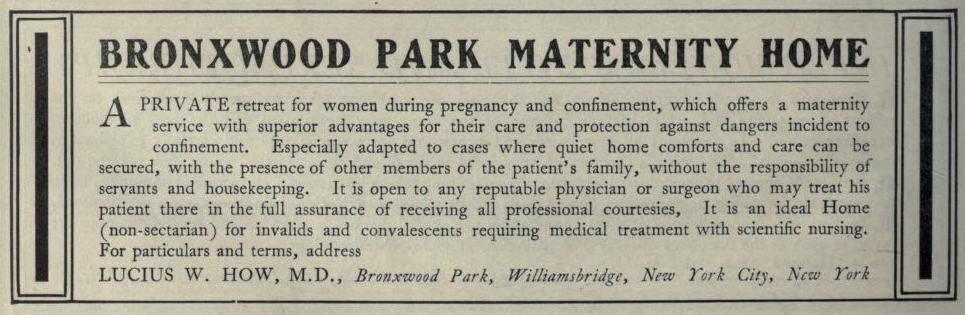
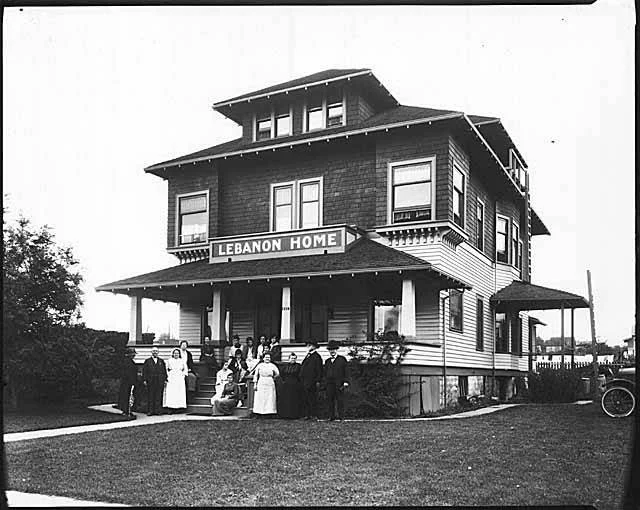
Above: Bronxwood Maternity Home advertisement, New York, 1906. American Medical Directory. Public domain, via Wikimedia Commons.
Below: Lebanon Home, Seattle, ca. 1920. Photograph by Webster & Stevens. Museum of History & Industry (MOHAI). Public domain, via Wikimedia Commons.
Adoption history extends far beyond maternity homes. From sealed birth records and the Baby Scoop Era to Indigenous child removal, transracial adoption, and international adoption, this talk asks what adoption can tell us about who gets to be a family, who has the power to keep their children, and who gets to decide.
Maternity homes, like this one, don’t look particularly political. That’s part of the point. Maternity homes helped turn ideas about gender, respectability, motherhood, and family into ordinary institutional practice—and helped build the culture of secrecy that shaped modern adoption.
“My classes always respond with interest and shock—the kind that shows they are deeply listening and learning—and with many questions. Queer students especially are forced to reconsider the supposed simplicity and selflessness adoption is too often said to manifest. And the occasional student who voices that they are adopted often reports being seen for the first time by listening to Dr. Munro.”— Dr. Andrew Pegoda, University of Houston